

New to riding? No problem. We’ll start here with a few general observations to be followed at all times when cycling:
1. Obey traffic lights and signs (see bottom of article).
2. Don’t cycle on the pavement unless it’s a designated cycle path.
3. Wear a helmet at all times.
4. Keep your bike in good condition.
5. Be aware of slippery surfaces when wet.
6. Ride with a positive attitude and be sure of your decisions.
* * * * * * * * * * * * * * * * * * * * * * * * * * * * * * * * * * * * * * * * * * * * *
When picking out cycling gear, brighter is always better! High visibility clothing is key to being seen by other road users. Visibility can vary over the course of any journey, and low cloud cover can create localised areas of fog, rain and/or darkness. When there isn’t clear daylight overhead, this may mean switching on your front and rear lights to ensure you remain conspicuous.

The following list highlights a few of the major Dos and Don’ts for road cyclists:
Make sure you’re in a position that is visible to motorists.
At junctions, check if other road users have seen you by making eye contact.
Signal clearly and in good time.
Use your bell to warn unaware pedestrians.
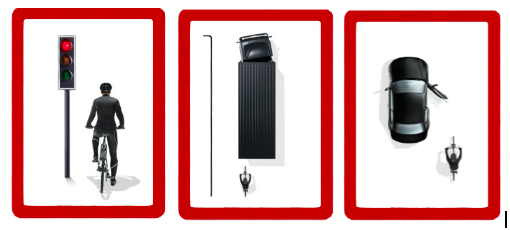
Lorries often pull out to the right before turning left. Do not ride into the gap between the vehicle and the kerb.
Avoid undertaking a vehicle when there is a road approaching to the left. Motorists often don't signal when turning. It’s better to hang back until the vehicle continues.
Drive central on narrow roads.
Ride a door’s width from parked cars.
If you’re cycling as part of a larger group, remain in a single-file at all times. Avoid cycling over potholes, puddles and drain covers where possible, and take extra care navigating across any non-road surfaces. In wet weather, increase your braking distance allowance and avoid any sharp turns.
After you’ve been out on the roads a few times you’ll become more and more confident with your positioning and maneuvering. If not, consider booking an hour-long cycle skills course through your local council, where you’ll receive further tips and advice.
We’ll finish here with a few of the common signs you'll likely encounter on both British and French roads:
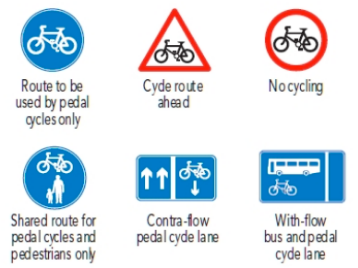
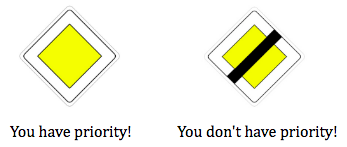
In addition to learning the road rules, you are also responsible for making sure your bike remains roadworthy. For further guidance on how to maintain your bike, checkout our article on How to look after your bike.